




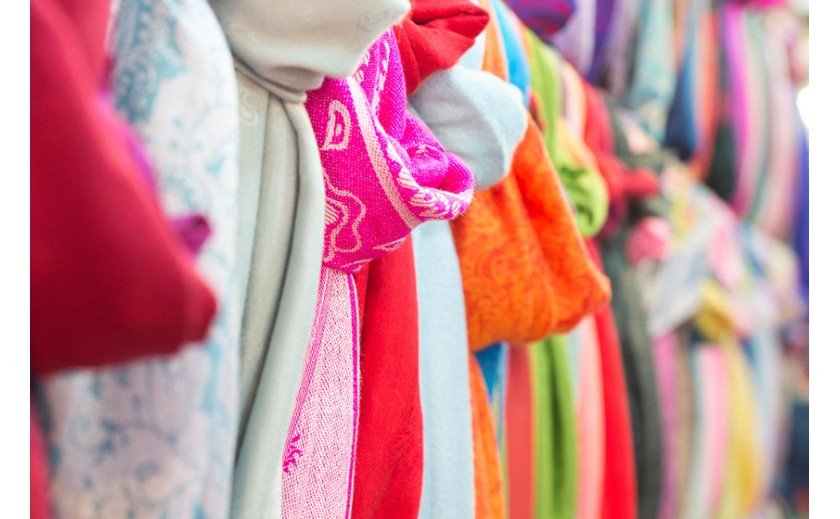
In the tourist area of Thamel in Kathmandu there are literally thousands of shops selling pashmina scarves. As a tourist it can be hard to navigate the large selection and insistent sellers.
Many of the scarves are labelled 100% pashmina or cashmere and are sold for around 1,000 NPR, roughly €7. This is not cashmere but so-called "tourist quality". They are typically made of wool blended with polyester or similar synthetic fibres. The scarves can be quite pretty, and as long as you are aware that you are being deceived it is not a big problem.

Because of the intense competition in the market, the pashmina shops constantly have to find new ways to cut corners to make the business profitable. A race to the bottom that benefits neither seller nor buyer. So what do you do as a tourist who wants to bring home a genuine pashmina from a trip to Nepal when you cannot trust the scarf's label?
It can be difficult to determine the composition of the material with the naked eye. Pure cashmere and wool have a completely matte surface. Synthetic materials will often have a shiny sheen, but so does silk.
Synthetic fibres
Textiles made of polyester can feel really soft. You can do the burn test if the seller allows it. It can reveal whether synthetic fibres are blended in or whether it is pure animal fibres. It cannot, however, tell you whether it is cashmere, wool, yak or angora.
And what does it matter, synthetic or not? Can't it be all the same if the scarf is pretty? Well, polyamide is related to plastic and therefore not very environmentally friendly, either to produce or when it is discarded. It also does not absorb moisture very well, so you will quickly start to sweat, which is not a pleasant feeling. Polyester clothing has an unfortunate tendency to develop static electricity. Over time it will also become ugly, whereas natural fibres usually develop a beautiful patina.
The cheap wool scarves found in the pashmina shops or markets in Nepal are often produced from short fibres or even waste from the primary wool production. The problem with the short fibres is that they are hard to hold in place in the yarn. A yarn consists of many fibres twisted together, and if the fibres are very short they are difficult to keep in place. The result is a scarf that pills, where the wool fibres gather in small balls on the surface of the fabric.
100% pashmina
 The price of a genuine cashmere scarf measuring 200 x 70 cm will be at least 6,000 NPR, roughly €45. The price can therefore be a good indicator, but you still risk being deceived if what you thought was a scarf of pure cashmere is in reality made of other wool and polyester.
Pashmina and cashmere were originally two words for the same thing, but pashmina is not an internationally recognised fibre, so it is not permitted to export garments under that description. If you come across a scarf with a label saying 100% pashmina, you can be fairly sure you are being deceived.
In the end it is a matter of trust. There are honest pashmina shops that, besides the tourist quality, also sell genuine cashmere.