Ikat weaving is a technique for dyeing and weaving textiles in which the yarn is tied and dyed before it is woven into a patterned fabric. The word "ikat" comes from the Indonesian word "mengikat", which means "to tie".
In the ikat weaving process the yarn is first tied at specific places with a resistant material, such as wax, string or tape, to prevent the dye from penetrating into certain areas. The yarn is then dyed, and the tied areas remain undyed. The process can be repeated with different colours and patterns, resulting in intricate and colourful designs.
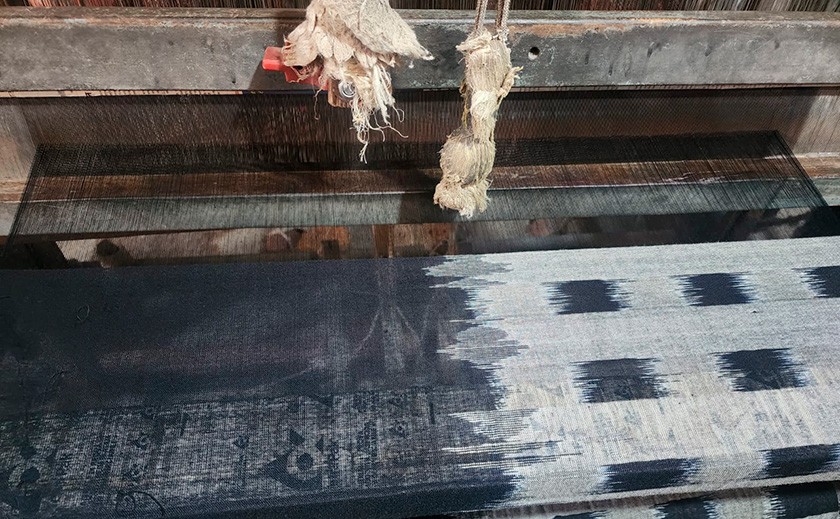
The picture below shows how our black/grey ikat scarf is made. The white yarn is partly covered with tape and bags, which means that it is only partly dyed with the black colour.
After dyeing, the tied and dyed yarns are woven on a loom to create the desired pattern. The end result is a unique, handmade fabric with a characteristic blurred or fuzzy look because of the small variations in the application of the dye.
Ikat weaving is practised in many countries around the world. Besides Nepal, where we make our scarves, it is also widespread in Indonesia, India, Japan and Central and South America. Besides scarves and shawls, ikat weaving is also used for other purposes such as clothing, throws, bedspreads and cushion covers.