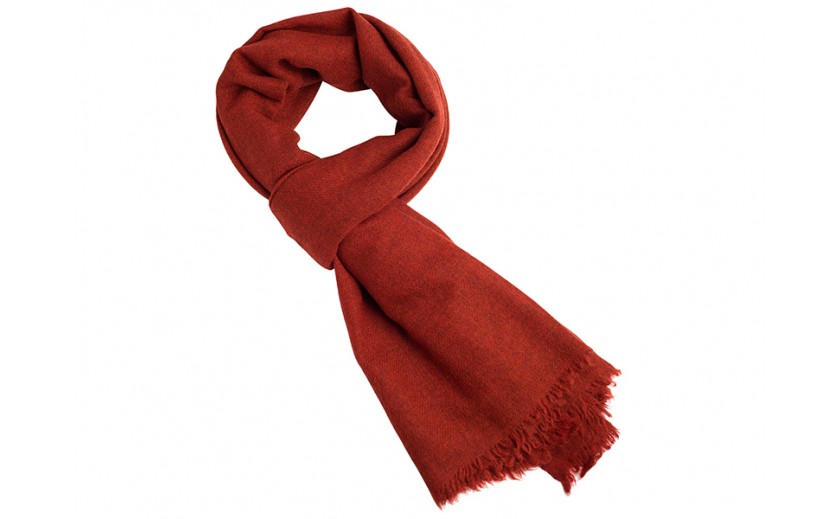
We have just received our first scarves in yak wool in the colours black, navy, orange and petrol blue, as well as a natural-coloured variant. We will gradually add more beautiful colours to this collection. Yak wool, like cashmere, is a luxury fibre known and loved for its fantastic softness. Far less yak wool is produced than cashmere, which is why this fibre is even more exclusive.
What is yak wool?
Yak wool comes from the yak, which lives in the inaccessible regions around the Himalayas, including Tibet. To cope with the biting cold of winter, the yak has developed a fine undercoat that insulates the animal against the extreme frost. Only the fine undercoat is used for textile production. The fibres of the undercoat have a diameter of between 16 and 20 micrometres. By comparison, cashmere fibres are between 12.5 and 19 micrometres.
Unlike cashmere, yak wool does not come in a completely white variant. The lightest wool has a light greyish-brown colour. This means we cannot dye the yak scarves in the light pastel colours. On the other hand, the scarves get a beautiful mottled effect when the colour meets the various grey and brown shades.
Like our cashmere scarves, the yak scarves are handwoven in Nepal. Here skilled weavers make all our shawls and scarves for CASHMERE CULTURE. The picture below shows the weaving of our natural-brown scarf.
Fake yak-wool blankets
Yak wool is a relatively costly material. That is why many counterfeits circulate on the market. We often see yak-wool blankets for sale at unrealistically low prices. Yak-wool yarn currently costs around €90 per kilo, so when a blanket weighing 1 kg is for sale for a fraction of that, it is obviously too good to be true. The blankets are typically brightly coloured, as in the picture below, and are usually made of a blend of wool and polyamide.
You can test yak wool in many of the same ways that you test whether cashmere is genuine.